Augmented reality and fashion: revolutionizing the shopping experience in jewelry and ready-to-wear
No commitment, no credit card required.
The challenge of selling jewelry and fashion online
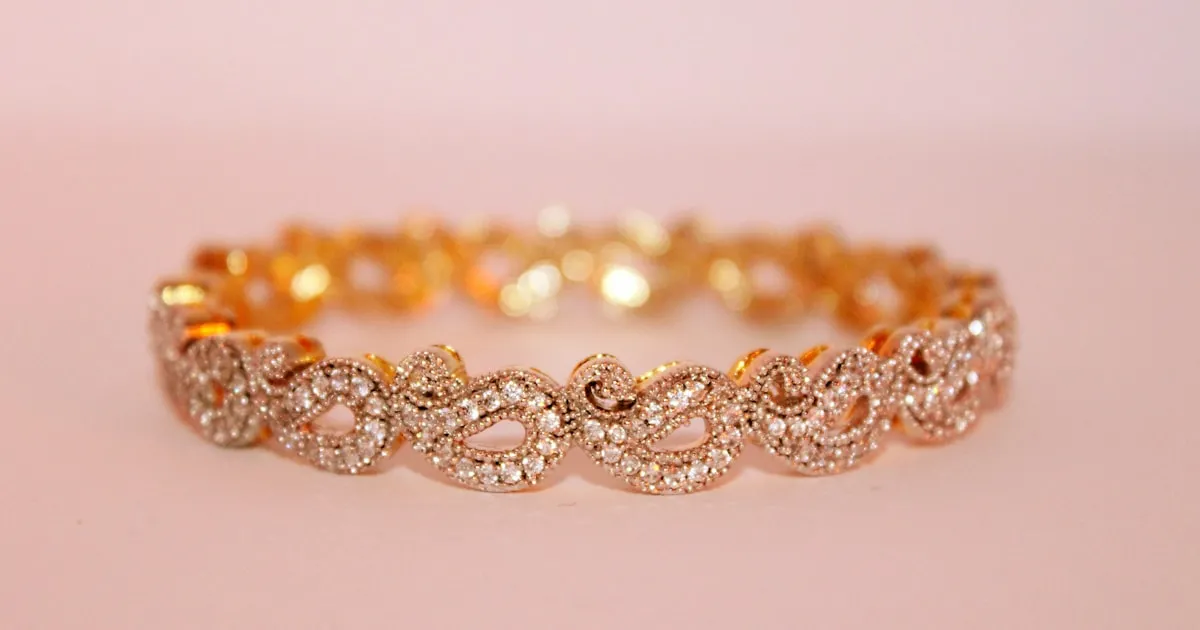
Jewelry and fashion are among the sectors most impacted by the challenge of online visualization. A piece of jewelry photographed on a white background conveys neither its real shine, nor its proportions, nor how it looks when worn. A handbag seen in photos gives no idea of its actual size.
Résultat : des taux de retours parmi les plus élevés du e-commerce, souvent supérieurs à 30%. Les clients sont déçus car le produit reçu ne correspond pas à ce qu'ils imaginaient en regardant les photos.
What augmented reality brings to fashion and jewelry
Augmented reality solves these problems by offering customers a realistic and interactive visualization before purchase:
- Life-size visualization: A necklace, watch or bag is displayed in 3D at its exact size. The customer can manipulate it, rotate it and zoom in on every detail.
- Projection in the environment: The customer can project the jewelry or accessory into their real environment using their smartphone camera, immediately seeing the result in context.
- Material perception: Metallic textures, gemstone reflections and leather grain are rendered realistically thanks to physically based rendering (PBR) of modern 3D viewers.
- Color and material variants: The customer can switch between different product versions (gold, silver, rose gold, different leathers) to choose the one that suits them best.
Jewelry use cases
Jewelry is a sector where augmented reality has a particularly strong impact:
- Rings and wedding bands: The customer views the ring in 3D to appreciate the design, setting and mount from all angles. Ideal for important purchases where every detail matters.
- Necklaces and pendants: Augmented reality allows judging the chain length and pendant size by projecting them at full scale.
- Watches: The dial diameter, case thickness and bracelet rendering are essential criteria that only interactive 3D allows to fully evaluate before purchase.
- Custom jewelry: By combining 3D with a variant configurator, you allow the customer to design their unique piece and view it from all angles before ordering.
Fashion and accessories use cases
- Handbags and leather goods: A bag's size is often poorly estimated in photos. In AR, the customer immediately sees the real proportions and can appreciate the quality of finishes.
- Shoes: Visualize the design, materials and colors in 3D. Particularly useful for limited editions or customizable models.
- Sunglasses: Frames can be viewed from all angles to appreciate the shape, dimensions and style before purchase.
- Luxury accessories: Belts, scarves, wallets — the quality of materials and finishes is essential and is revealed much better in 3D than in photos.
Advantages for fashion brands
- Reduced returns: Customers who view a product in 3D and AR have a realistic expectation of what they will receive, significantly reducing returns related to visual disappointments.
- Innovative brand image: Offering augmented reality positions your brand as modern and attentive to customer experience.
- Competitive differentiation: In a saturated online market, 3D and AR are a strong differentiating factor.
- Increased engagement: Visitors spend on average twice as much time on a product page equipped with a 3D viewer than on a standard page.
Getting started with Visuality
Visuality enables jewelry and fashion brands to easily offer augmented reality to their customers:
- Import your 3D models: If you already have 3D models (GLB, glTF), import them directly into your library.
- Generate with AI: If you don't have 3D models, use the AI photo-to-3D conversion feature to quickly create usable models.
- Configure variants: Add color and material variations to offer an interactive product configurator.
- Integrate into your store: Use our PrestaShop and Shopify modules, or integrate the viewer via iframe on any website.