WebAR vs mobile app: which approach for your augmented reality?
No commitment, no credit card required.
What is WebAR?
WebAR (Web-based Augmented Reality) is a technology that allows accessing augmented reality directly from a web browser, without any app to install.
Technically, WebAR relies on modern web standards. The WebXR API, supported by recent browsers (Chrome, Safari, Edge, Firefox), allows accessing the smartphone's camera and motion sensors to overlay 3D objects on the real-world image.
The operation is transparent to the user: they visit a page containing a 3D viewer, explore the product by rotating and zooming, then launch augmented reality with a single click. Everything takes place in the browser, without friction.
What is an AR app?
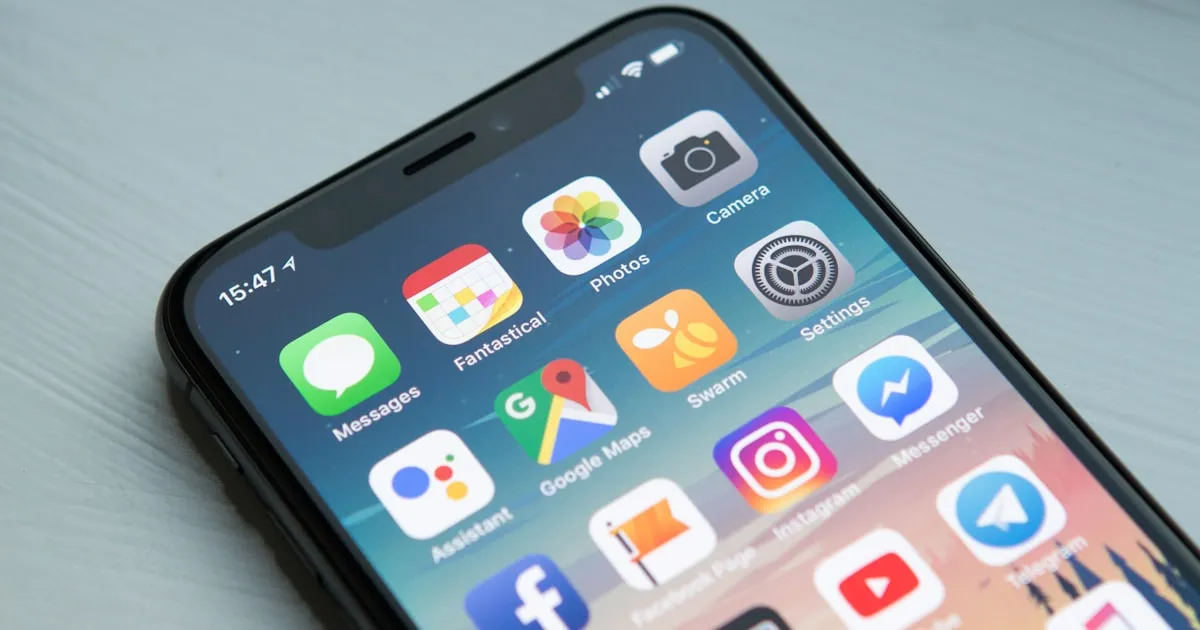
An augmented reality app is dedicated software that the user downloads and installs from a store (Google Play Store or Apple App Store). It offers an AR experience by leveraging the smartphone's native frameworks.
The main advantage of a native app is complete access to the smartphone's hardware capabilities. The ARCore and ARKit frameworks offer more precise surface detection, smoother motion tracking and superior graphical performance.
However, the major obstacle is downloading. Each additional step in the user journey leads to a significant loss of audience. Studies show that asking a customer to download an app reduces the adoption rate by 60 to 80%. This is a considerable barrier, especially for one-time use like product visualization before purchase.
WebAR advantages
- Zero friction: No download, no installation, no account to create. The customer accesses augmented reality in one click. This is WebAR's most decisive advantage.
- Instant access: A link, QR code or button on a product page is enough. The customer goes from discovering the product to AR visualization in seconds.
- Universal compatibility: WebAR works on all modern smartphones equipped with a recent browser. No restriction to a single operating system.
- Easy sharing: A WebAR link is shared as simply as a regular web link: by email, SMS, WhatsApp, social media or printed QR code.
- Reduced maintenance cost: No app to maintain on two stores (iOS and Android), no updates to submit to Apple and Google.
Advantages of a mobile app
- Offline mode: The app can store 3D models locally and work without an internet connection. This is a crucial advantage for traveling salespeople or trade shows with unstable networks.
- Superior performance: Direct access to native frameworks (ARCore, ARKit) enables more precise motion tracking, more robust surface detection and smoother graphic rendering.
- Push notifications: The app can send notifications to alert users about new products, promotions or updates.
- Deep integration: The app can access advanced smartphone features like LiDAR (on iPhone Pro), local saving of favorite models or viewing history.
- Repeated use: For users who regularly view 3D models (salespeople, architects, decorators), a dedicated app offers faster access and an optimized experience.
WebAR vs App comparison table
- Accessibility: WebAR = instant (one click) | App = requires download and installation
- Adoption rate: WebAR = very high (no friction) | App = low for one-time use (60-80% abandon at download)
- AR Performance: WebAR = good on recent devices | App = excellent (native access to AR frameworks)
- Offline mode: WebAR = not available | App = available (local model storage)
- Development cost: WebAR = low (web standard) | App = high (iOS + Android development)
- Maintenance: WebAR = simple (server update) | App = complex (store submission, multiple versions)
- Sharing: WebAR = easy (link, QR code) | App = difficult (requires prior installation)
- Main use case: WebAR = e-commerce, marketing, product pages | App = field sales, trade shows, intensive use
How to choose?
The choice between WebAR and mobile app depends above all on your use case and target audience. Here are recommendations for the most common scenarios:
- E-commerce customers: WebAR is the obvious solution. Your customers visit your site for the first time, discover a product and want to see it in AR. WebAR allows them to do so instantly, without friction.
- Field salespeople: The app is recommended. Your salespeople visit clients regularly, often in areas with variable network coverage. The app allows them to pre-load models and work offline.
- Trade shows and events: Both approaches are complementary. The app for booth demonstrations (offline, optimal performance), WebAR for visitors who scan QR codes.
- Marketing and advertising: WebAR is ideal. A QR code in a magazine ad, a link in a marketing email, a button on an Instagram post — WebAR transforms every medium into an AR experience.
The Visuality solution: the best of both worlds
Visuality chose to offer both complementary approaches, as they address different needs and coexist perfectly in a complete AR strategy.
The Visuality web viewer offers a complete WebAR experience: interactive 3D visualization in the browser, augmented reality projection without download, sharing by link and QR code, iframe integration on any site.
The Visuality Android app complements this offering by providing offline access to 3D models, optimized performance and a dedicated interface for professional uses (sales, trade shows, demonstrations).
The same 3D content is accessible via both channels. You manage your models from a single dashboard, and they are automatically available on the web (WebAR) and in the app (offline mode).
This hybrid approach allows you to cover all use cases: WebAR to maximize reach and accessibility for your customers, the app for professional use cases requiring offline or optimal performance.